AirTag vs GPS Tracker for Dogs: Which Should Australian Owners Choose?
Share
Quick answer: if you mostly walk your dog around suburbs, parks and towns where there are plenty of iPhones nearby, a good AirTag holder is a genuinely useful, no-subscription option. If you live rurally, walk in national parks or bushland regularly, or want live, real-time tracking rather than “last seen near here,” a cellular GPS tracker is the better tool — and it costs more, ongoing, to get it.
We sell an AirTag holder, not a GPS tracker, so it would be easy to assume we’re going to talk GPS trackers down. We’re not. They solve a different problem, and pretending otherwise doesn’t help anyone find their dog faster.
How each one actually works
AirTag and the Find My network
An AirTag doesn’t have GPS or a SIM card. It’s a small Bluetooth beacon. When it’s within Bluetooth range (roughly 10–30 metres, less with obstacles) of any iPhone running Find My — not just yours — that stranger’s phone anonymously relays the AirTag’s location to Apple’s network, and you see it on your map. This is genuinely clever, and in a busy area it works almost like magic. Apple’s own guidance is blunt about the trade-off: the system depends on nearby Apple devices to work at all.
The practical effect: in a dense urban or suburban area, your AirTag’s location updates often, because there’s almost always someone’s iPhone nearby. In a quiet regional town, a national park, or a large rural property, there may be long stretches where no iPhone comes within range, and the map simply shows the last confirmed sighting — sometimes hours old.
Cellular GPS trackers
Brands like Tractive, Tracki and GeoZilla put an actual SIM card and GPS chip in the device. It talks to phone towers, not nearby strangers’ phones, so it can report a live location (often updating every few seconds in “live mode”) almost anywhere there’s mobile coverage — which, in Australia, is most populated areas but still has real gaps in remote regions. This costs a monthly or annual subscription, typically in the $10–20/month range depending on the plan and hardware.
Cost comparison over 12 months
| AirTag + holder | Cellular GPS tracker | |
|---|---|---|
| Upfront | ~$29 (AirTag) + ~$20–40 (holder) | Device cost, often $50–150 |
| Ongoing | $0 | ~$10–20/month subscription |
| 12-month total (approx.) | $50–70 | $170–390+ |
| Live tracking | No — last known location only | Yes, in most areas with coverage |
| Works with no nearby iPhones | No | Yes, if there’s mobile coverage |
| Battery life | Up to ~1 year | Typically days, needs regular charging |
These are approximate, based on publicly listed pricing at the time of writing — always check current pricing directly with each brand, as plans change.
Where each one falls short
Neither option is perfect, and it’s worth being upfront about both.
AirTag’s real limitation isn’t the AirTag itself — it’s the Find My network’s density. We’ve written a full, honest breakdown of this specifically for Australian conditions in Does an AirTag Actually Work to Find a Lost Dog in Australia?, because it deserves more than a paragraph.
GPS tracker limitations are less discussed but just as real: you’re paying every month, forever, for as long as you want tracking. Battery life is measured in days, not months, so you need to actually remember to charge it — a tracker with a flat battery is no tracker at all. And most units are noticeably bulkier on a collar than an AirTag holder.
A day in the life of each option
It’s easier to picture the difference through an actual day than through specs alone.
AirTag day: Your dog wears a collar with an AirTag in a secure holder. You never think about it — no app to check daily, no battery to charge. If your dog gets loose in the neighbourhood, you open Find My and see roughly where they were last detected, updated as recently as the last nearby iPhone. In a busy suburb, that might be minutes old. On a quiet rural road, it might be from this morning.
GPS tracker day: You’ve charged the device recently (most need charging every few days to a week). You can open the app any time and see a live, moving dot as your dog walks the same route you already know. If they bolt, you watch the dot move in real time and can literally follow it, even in an area with no other Apple devices around. The trade-off arrives at the end of the month, when the subscription renews.
Battery and maintenance realities
This is genuinely underrated in most comparisons. An AirTag’s coin-cell battery lasts roughly a year and needs no real thought. A GPS tracker’s rechargeable battery needs regular charging — often every few days in “live tracking” heavy use, longer in standby/check-in modes — which means a forgotten charge is a tracker that silently stops working exactly when you might need it. If you’re the kind of person who lets your phone run down to 2% regularly, factor that habit into which option actually protects your dog in practice, not just on paper.
Which is right for your situation
- Mostly suburban walks, dog parks, on-lead most of the time: AirTag + a secure holder is a sensible, low-cost first step.
- Off-lead in national parks, bushwalking, rural or acreage property: a cellular GPS tracker is the more reliable tool, because it doesn’t depend on other people’s phones being nearby.
- A dog with a real bolting history (noise-reactive, escape artist, recently rehomed and still settling in): consider both — an AirTag as the cheap, always-on baseline, and a GPS tracker for the higher-risk periods (fireworks season, moving house, boarding).
- Older dogs prone to wandering or disorientation: see our dedicated piece on senior dogs and wandering — the tracking-tech advice is similar, but the “why” is worth understanding.
For a full three-way comparison including microchips, see Microchip vs GPS Tracker vs AirTag: What Actually Gets Lost Dogs Home Safely?
What we recommend
Start with the honest question: how much of your dog’s life happens somewhere with reasonably dense iPhone ownership nearby? For most Australian dog owners in cities, suburbs and regional towns, that’s most of the time — which is exactly the situation an AirTag and a properly secure, waterproof holder was designed for. If you’re regularly somewhere quieter, budget for a GPS tracker instead, or run both.
We’d rather you buy the right tool than just the one we sell.
FAQs
Can an AirTag replace a GPS tracker for a dog? For live, real-time tracking anywhere, no — an AirTag only reports location when an iPhone is nearby. For a low-cost way to help locate a dog in populated areas, it’s a genuinely useful option, not a lesser version of GPS.
Do AirTags work in rural Australia? They can, but less reliably than in cities and suburbs, because they depend on nearby iPhones to relay location. In areas with very few Apple devices around, an AirTag may show only a last-known location from hours earlier.
What’s cheaper long-term, AirTag or GPS? An AirTag and holder cost roughly $50–70 total with no ongoing fees. A cellular GPS tracker typically costs $170–390+ across a year once the subscription is included.
Can I use both at once? Yes — some owners run an AirTag as a permanent, no-cost baseline and add a GPS tracker for higher-risk periods or environments. There’s no conflict between the two.
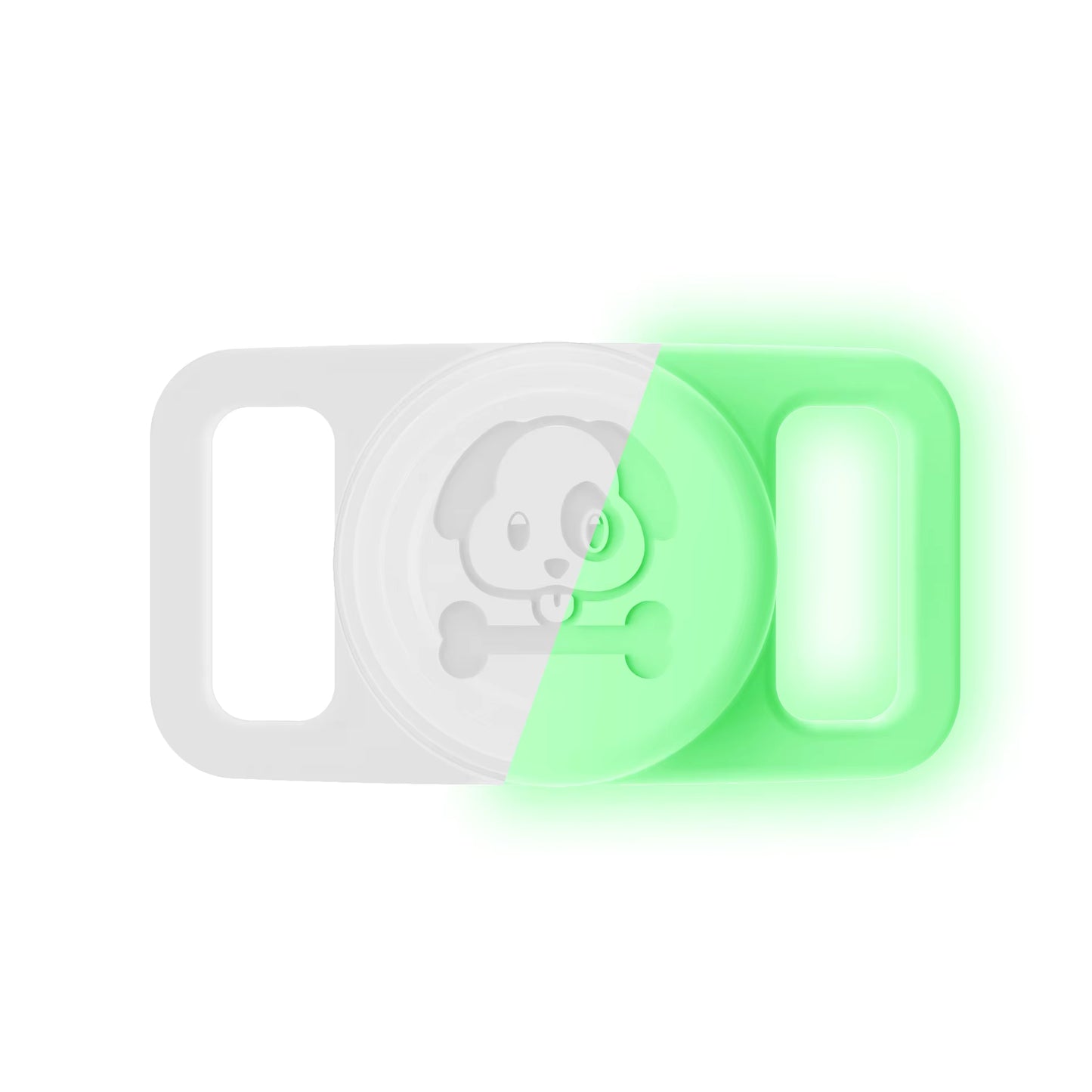
Whichever way you land, don’t let the tracker be the weak link — see how the Pawfetchers waterproof holder works.