Bringing Home a Rescue Dog: The First 30 Days (and Why Flight Risk Is Highest Then)
Share
Quick answer: a newly adopted rescue dog is statistically and behaviourally at their highest risk of bolting in the first few weeks in a new home — they don't yet know you, don't recognise your house or yard as "home," and are operating under genuine stress in an unfamiliar environment. Rescue organisations commonly refer to this as the "3-3-3 rule" (roughly 3 days to decompress, 3 weeks to start settling, 3 months to feel truly at home) as a general guide, not a strict timeline — every dog is different. Treating the first month as a higher-security period, rather than assuming your new dog will behave like a settled family pet immediately, prevents most early escapes.
Why the first few weeks are different
A dog that's just been adopted — whether from a shelter, rescue group, or foster home — doesn't yet have the bond, the recall training, or the sense of "this is home" that an established dog has. Even a dog that seems calm and confident on day one may still bolt if startled, since the instinct to run toward the familiar (which, for them, right now, isn't your house) can override training that hasn't been built yet. This isn't a reflection of the dog's temperament or your handling — it's a genuinely predictable pattern in the adjustment period, and rescue organisations see it often enough that it's commonly discussed in adoption guidance.
The first few days: decompression
- Keep the environment calm and predictable — avoid overwhelming a new dog with visitors, busy outings, or big changes in the first few days.
- Establish a consistent routine for feeding, toileting, and rest as early as possible — predictability helps a stressed dog settle faster than a chaotic introduction to your life.
- Don't expect full trust or bonding immediately — some dogs warm up within days, others take weeks, and this varies enormously by individual history and temperament, not by how good an owner you are.
Security first, during this period specifically
This is where flight risk is genuinely highest, and it's worth treating containment more conservatively than you might for an established dog:
- Double-check your fence line before your dog arrives, the same way you would for a new puppy — a rescue dog's size, digging tendency, or jumping ability may not match what your existing fence was built for.
- Keep them on a lead for outdoor toilet breaks initially, even in a fenced yard, until you're confident in the fence's security and have some read on the dog's behaviour — many rescue organisations explicitly recommend this for the first weeks.
- Don't fully trust recall yet, even if the dog appears well-trained — a dog that reliably came when called in a shelter or foster environment may not yet transfer that behaviour to you, in an unfamiliar space, under real-world distraction.
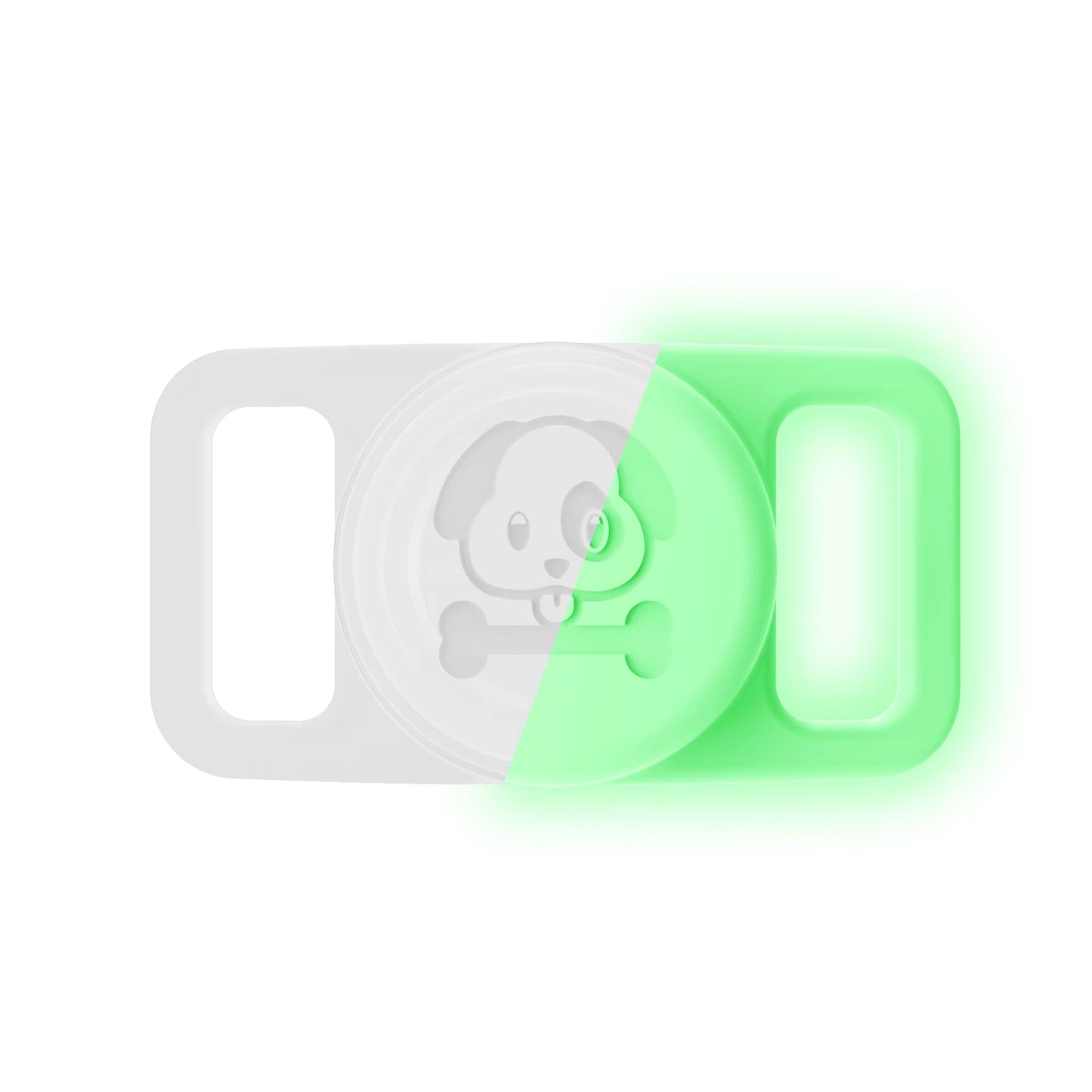
- Get ID sorted immediately, not eventually — update the microchip registration to your details as soon as legally possible (this is often started as part of the adoption process, but confirm it's actually been updated), get a collar with a current ID tag on from day one, and consider a secure AirTag holder specifically for this higher-risk settling-in period, not just "eventually once they're settled."
- Be extra cautious with doors and gates — a dog that doesn't yet understand your household's routine is more likely to bolt through a door left open briefly, particularly if they're still anxious or looking for an exit.
Weeks two and three: building trust
As decompression progresses, most dogs begin showing more of their genuine personality, start testing boundaries a little (a good sign of growing comfort, not a setback), and begin forming a real bond. This is a good window to start basic recall training in a secure, enclosed space — building the skill you'll eventually rely on, rather than assuming it's already there.
Month two and three: settling in fully
By this stage, most dogs have a genuine sense of routine, family, and home — though timeline varies significantly by individual dog, past history, and breed. This doesn't mean security measures should be dropped entirely, just that the exceptionally high flight risk of the first weeks typically eases as trust and training build.
Signs your rescue dog is settling well
- Seeking you out for comfort or affection, rather than only tolerating it
- Relaxed body language at rest — not constantly alert or hypervigilant
- Improving response to their name and basic cues
- Settling into a predictable eating, sleeping, and toileting routine
If your rescue dog seems to be struggling significantly beyond the first month or two — persistent anxiety, resource guarding, or ongoing escape attempts — it's worth consulting a vet or qualified dog behaviourist rather than assuming it will simply resolve with more time.
FAQs
Is the "3-3-3 rule" scientifically proven? It's a widely used general guideline from rescue and shelter organisations based on common patterns, not a strict scientific timeline — useful as a rough expectation-setter, but every dog's individual adjustment period varies.
Should I let my new rescue dog off-lead in the backyard right away? Most rescue organisations recommend a more cautious approach initially — supervised, leashed toilet breaks even in a fenced yard — until you're confident in both the fence's security and the dog's behaviour.
Why did my calm, friendly rescue dog suddenly bolt? Even a dog that seems settled can act on instinct if startled, particularly in the early weeks before they've fully bonded to you and your home as "safe." This is exactly why extra precautions in the first month matter, even with a dog that seems well-adjusted.
When should I add a tracker to my new dog's collar? As early as possible, ideally from day one — the settling-in period is exactly when the added security matters most, not something to add later "once they're used to us."
The first month is exactly when a secure, waterproof AirTag holder earns its keep. See how Pawfetchers works.