My Dog Ran Off — How GPS and AirTag Collars Can Save Your Dog's Life
Share
It Happens in a Split Second
You're at the park. You look down at your phone for five seconds. You look up — and your dog is gone. It's one of the most terrifying experiences a dog owner can have, and it happens more often than most owners expect.
The good news? Technology has made it easier to find a lost dog. GPS trackers and Apple AirTags can help with pet safety — but only if they're attached correctly and you understand what each one can and can't do.
How Does an AirTag Work for Dogs?
Apple AirTags use Bluetooth and the Find My network — a crowd-sourced network of Apple devices — to report the location of your tag. When your dog goes missing, any nearby Apple device (even a stranger's iPhone) can silently detect your AirTag and relay its location to you via the Find My app.
Key things to know:
- AirTags work best in populated areas where there are other Apple devices nearby
- They update location when another device is in range — not in real-time like a cellular GPS
- Battery life is approximately 12 months (CR2032 coin battery)
- They're water resistant (IP67) but not designed for repeated swimming — which is why a waterproof holder helps for beach and water dogs
How Does a GPS Tracker Work for Dogs?
Cellular GPS trackers use mobile networks to provide real-time location updates, typically via a dedicated app. Unlike AirTags, they work anywhere there's mobile coverage — making them a better fit for rural areas or off-leash adventures far from other people.
Most GPS trackers require a monthly subscription and need to be charged regularly. Check current pricing with each brand.
AirTag vs GPS Tracker: Which Is Right for Your Dog?
| Feature | Apple AirTag | GPS Tracker |
|---|---|---|
| Real-time tracking | No (crowd-sourced) | Yes |
| Works in rural areas | Limited | Yes (with mobile coverage) |
| Battery life | ~12 months | Days, needs charging |
| Monthly cost | None | Subscription |
| Best for | Urban/suburban dogs | All environments |
For a deeper comparison, read AirTag vs GPS tracker for dogs.
Why a Secure Holder Matters
The tracker is only as good as its attachment. A loose or flimsy holder can fall off during play, swimming, or rough terrain — leaving you with a tracker in the bushes and no idea where your dog is.
A purpose-built, waterproof collar holder keeps your AirTag:
- Securely attached to the collar
- Protected from water, sand, and mud
- Sitting flush so it doesn't snag or bother your dog
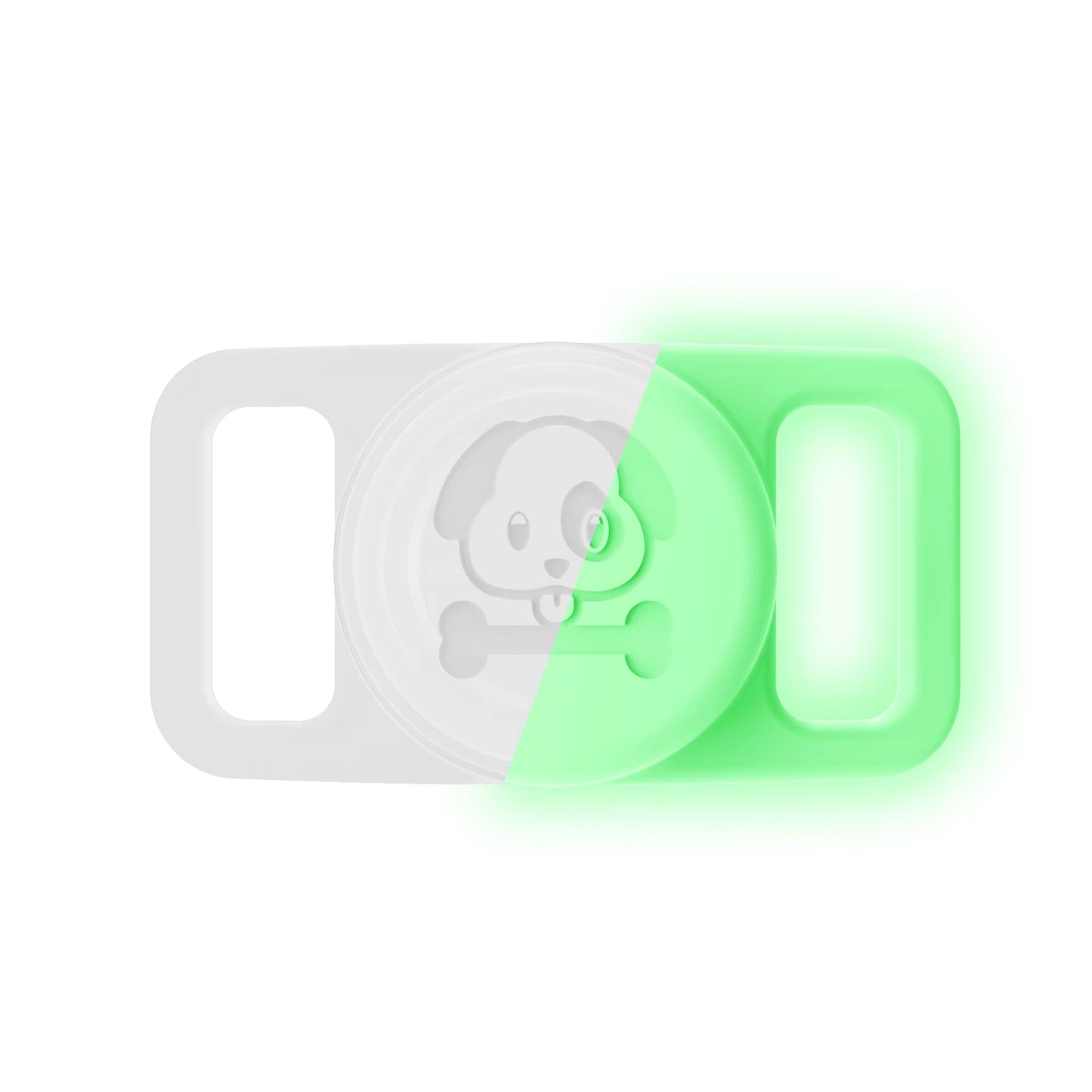
The Pawfetchers waterproof AirTag holder is designed for this — it slides onto flat collars 15–25mm wide, fits AirTag and similar coin-style trackers, and is rated waterproof to 1 metre for 30 minutes. AirTag sold separately.
What to Do If Your Dog Goes Missing
- Check your AirTag or GPS app immediately for last known location
- Contact your local council and nearby vets
- Post on local Facebook community groups and Lost Pets pages
- Mark your dog as missing on your state's pet registry (e.g. NSW Pet Registry)
- Put up flyers in the area of last known location
Step-by-step help: what to do in the first 24 hours after your dog goes missing.
Prevention Is Always Better Than Recovery
The best outcome is never having to search for your dog at all. A tracker in a secure, waterproof holder — combined with good recall training and a well-fitted collar — gives you more ways to keep your dog safe and findable.