What Happens When Your Dog Goes Missing at Night? (And How to Prevent It)
Share
A dog going missing at night is every owner's nightmare. The darkness, the silence, the not knowing — it's terrifying. But understanding what actually happens when a dog goes missing after dark, and how to prevent it, can make all the difference.
Why Night-Time Disappearances Are More Dangerous
When a dog goes missing at night, the risks multiply quickly:
- Reduced visibility — your dog is harder to spot, and they can't see hazards as clearly either
- Traffic danger — drivers are less likely to see a dog on the road at night
- Wildlife encounters — in Australia, night-time brings out snakes, cane toads (in QLD), and other hazards
- Temperature drops — particularly in southern states during winter
- Fewer people around — less chance of someone finding and helping your dog, and fewer iPhones nearby to update an AirTag's location
- Shelters are closed — if someone does find your dog, they may not be able to hand them in until morning
What Typically Happens When a Dog Goes Missing at Night
The First Hour
Many dogs stay close in the first hour, exploring the immediate neighbourhood and following scent trails. This is the best window to find them — search your street and nearby blocks immediately.
After a Few Hours
A dog that isn't found quickly may travel further, following interesting scents or being spooked by traffic or other animals. They may hide under cars, in gardens, or in quiet corners.
By Morning
Dogs often settle somewhere overnight. They may be found by an early-morning walker, a neighbour, or a council ranger. This is why having your microchip details up to date is critical — if someone takes your dog to a vet or shelter, they can contact you.
How to Search for Your Dog at Night
Check Your AirTag First
If your dog is wearing an AirTag in a holder, open the Find My app immediately. It shows the last place your dog was detected and how long ago. At night, with fewer people about, that location may be older than you'd see during the day. Share it with anyone helping you search, and switch on Lost Mode.
Bring Familiar Scents
Carry your dog's favourite toy or a piece of your clothing. Dogs navigate by scent — familiar smells can draw them to you.
Use a Torch and Call Calmly
Shine your torch low to the ground and under cars. Call your dog's name in a calm, happy voice — a panicked or angry tone can make a frightened dog hide further.
Leave Your Gate Open
Leave your yard gate open with familiar bedding or food near the entrance. Many dogs find their way home on their own and just need a way back in.
Alert the Neighbourhood
Post immediately on local Facebook groups and Nextdoor. Night-time posts often get fast responses from people who are awake and nearby.
How to Prevent Night-Time Disappearances
Secure Your Yard Before Dark
Do a fence check every evening. Gates left ajar, loose panels, and gaps at ground level are common escape routes. Make it a habit to check before you go to bed.
Manage Noise Phobia
Fireworks, storms, and loud noises are common triggers for night-time escapes in Australia. If your dog has noise phobia, work with your vet on a management plan before storm season.
Keep Your Dog Inside at Night
The simplest prevention is keeping your dog indoors after dark. This removes most of the escape risk and protects them from wildlife encounters and temperature extremes.
Keep an AirTag on the Collar
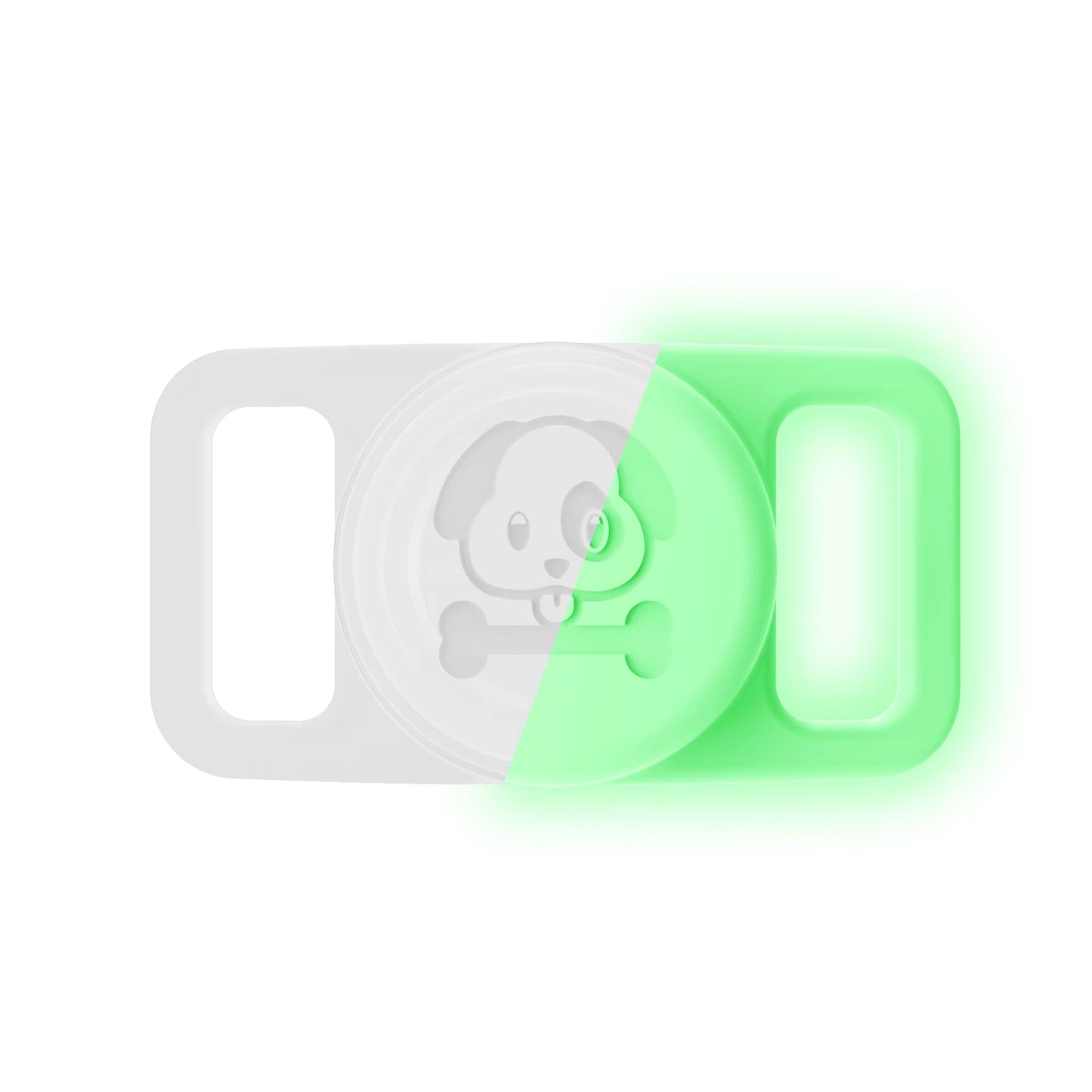
Even if your dog is inside at night, accidents happen — a door left open, a visitor who doesn't know to watch the gate. An AirTag in a Pawfetchers waterproof holder means you have a last detected location to start from, day or night (AirTag sold separately).
Reflective Collar or Lead
If your dog does get out at night, a reflective collar or lead makes them more visible to drivers.
Frequently Asked Questions
How far can a dog travel in one night?
It depends on the dog and what spooked them. A scent-following Beagle or a high-drive Border Collie can cover several kilometres in a few hours, while many dogs stay closer to home.
Should I search for my dog at night or wait until morning?
Search immediately. The first hour is the best window to find your dog close to home.
Can an AirTag help find my dog at night?
It can. An AirTag doesn't need daylight; it updates whenever a nearby Apple device detects it. At night there are fewer people about, so updates may be less frequent. It isn't live GPS, so treat the map as a starting point for your search.
The Bottom Line
Night-time disappearances are harder to resolve than daytime ones. The best approach is prevention: secure your yard, manage noise phobia, and keep your dog inside after dark. Then make sure there's ID and an AirTag on the collar, so if the worst happens you have somewhere to start.