AirTag Dog Collar vs Clip-On Holder: Which Attachment Is Safer?
Share
Two product formats solve the same basic problem — carrying an AirTag securely on your dog. The right one depends on how many dogs you have and how you use your existing gear.
What's the difference between a built-in AirTag collar and a separate holder?
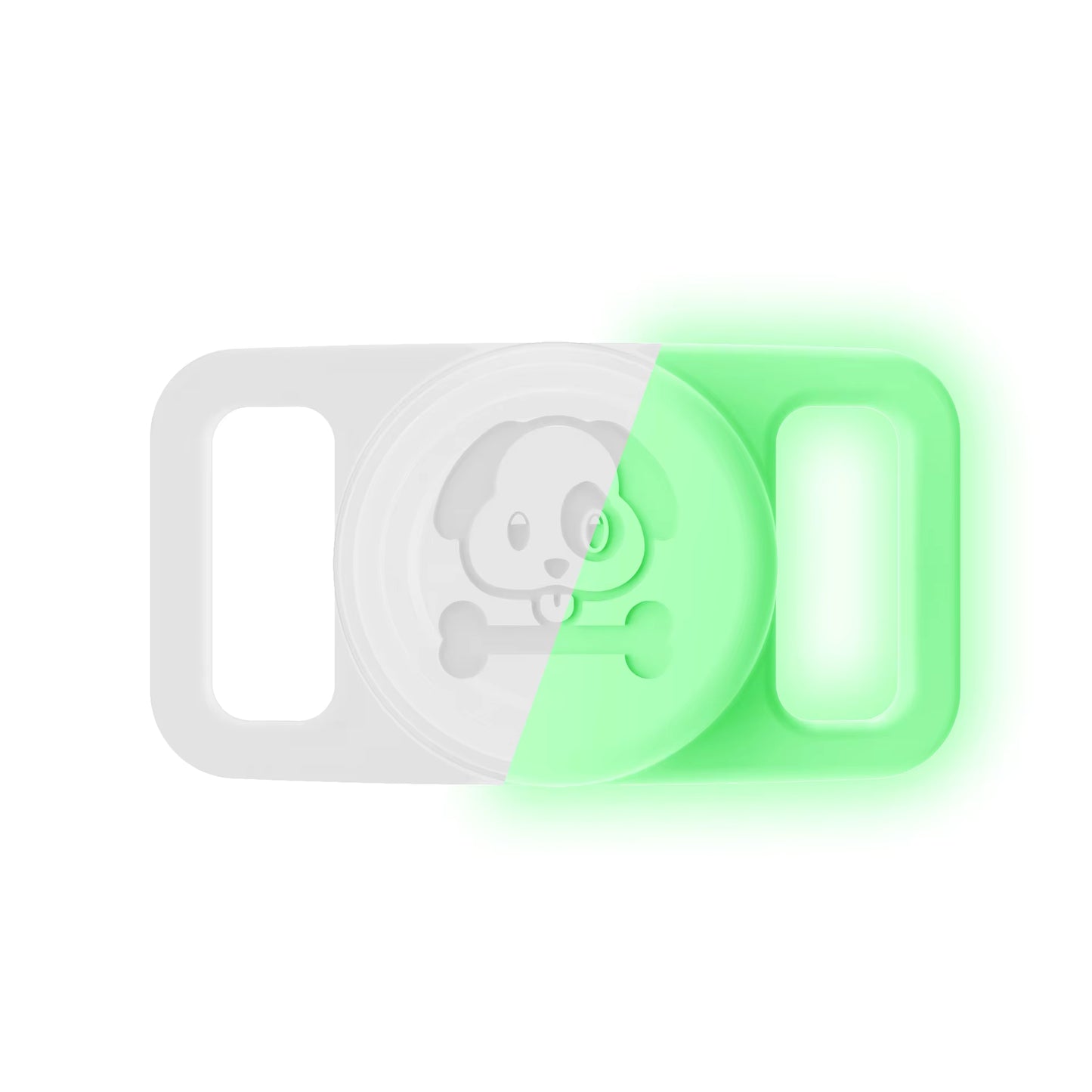
A built-in AirTag collar replaces your dog's collar entirely, with an AirTag pocket sewn or moulded into it. A separate holder attaches to a collar your dog already wears. The Pawfetchers holder is a slide-on type: the collar slides through it, so nothing dangles. Other holders clip on with a separate clip or loop.
Which is easier to move between dogs?
A separate holder. It slides off one collar and onto another in about a minute, while a built-in collar is fixed to that collar. For two dogs out at the same time, see the 2-Pack.
Which holds up better to repeated wet and dry cycles?
A sealed silicone holder made around an AirTag's dimensions is designed for water. A pocket sewn into a fabric collar can trap moisture in the stitching, depending on the collar. Either way, check the product's stated water rating rather than relying on the word "waterproof".
Does a separate holder affect collar comfort or fit?
A slide-on holder sits flat against the collar and adds very little bulk. It does add a little weight, so check the collar still sits comfortably, especially on very small dogs.
What should you check before buying either style?
For a separate holder, check it fits your dog's collar width (the Pawfetchers holder fits flat collars 15–25mm wide) and its water rating — see is the Pawfetchers holder waterproof? For a built-in collar, check the pocket holds the AirTag snugly and that the collar sizes correctly for your dog.
Frequently asked questions
Can I move an AirTag holder between two dogs?
Yes, a separate holder moves between collars easily.
Does a holder fit any collar?
No. Check the holder's stated width range against your dog's collar. Ours fits flat collars 15–25mm wide.
Is a built-in AirTag collar more secure?
Not inherently. Both aim for a snug fit. The main difference is flexibility versus an all-in-one design.
Shop the AirTag Dog Collar Holder →
Related reading: Why two AirTag holders beat one · Why dogs slip their collars at the beach