How to Teach Your Dog a Reliable Recall at the Beach
Share
Quick answer: Teach recall with rewards, not punishment. Start at home with no distractions, use treats your dog loves, then practise on a long line in quieter places before trying the beach. RSPCA Australia suggests waiting until your dog comes back at least 80% of the time on a long line in busy settings before going off lead, and only in areas where off-lead dogs are allowed.
The beach is full of exciting things for a dog: waves, seagulls, smells and new friends. That makes it one of the hardest places to call your dog back.
The good news is that recall is a skill you can build, one small step at a time. Here's a kind, practical plan.
Why is recall so important at the beach?
A good recall lets you call your dog away from trouble. That might be a washed-up bluebottle, a rip, another dog who wants space, or a family having a picnic.
It also keeps your dog welcome at the beach, as Northern Beaches Council notes that, by law, dogs must be under effective control at all times. Our guide to off-leash dog safety explains more.
How do I start teaching recall?
Begin at home, where there's very little to distract your dog. RSPCA Australia recommends a simple "follow me" game.
- Drop a treat on the floor for your dog to find.
- Walk a few steps away while they eat it.
- Call your dog's name and your recall word, such as "come", in a happy voice.
- Say "yes" or "good dog" the moment they move towards you.
- Reward them generously with praise and a treat when they reach you.
- Repeat a few times a day, moving to different rooms and then the backyard.
Keep sessions short and fun. Always reward your dog for coming back, even if they were slow about it.
What treats work best for recall training?
Use "high value" rewards that are more exciting than whatever is distracting your dog. For many dogs, that means small pieces of something tasty, rather than their everyday food.
If your dog isn't food-motivated, try a favourite toy. RSPCA Australia suggests keeping that toy out of sight between sessions so it stays special.
When your dog comes back in a really tricky moment, give them a "jackpot": several treats in a row with lots of praise.
How do I use a long line for beach recall?
A long line is a lead that is much longer than usual. It gives your dog freedom to sniff and explore, while you stay in control.
- Clip the long line to a well-fitted harness or collar.
- Let your dog wander and sniff, holding the line loosely.
- Call them back when they're not too distracted.
- Reward, then release them again to keep exploring. This teaches them that coming back doesn't always mean the fun is over.
- Increase the distance and distractions slowly, only once your dog is succeeding.
Choose quieter times and spots to begin, such as an early-morning walk on a dog-friendly beach. Our guide to dog-friendly beaches on Sydney's Northern Beaches is a good place to start.
How do I practise recall around distractions?
This step is called "proofing". You slowly build up from easy places to harder ones: home, backyard, quiet park, then busier areas and finally the beach.
- Set your dog up to succeed. Call when they're likely to come, not mid-sniff or mid-chase.
- Don't keep repeating the cue. RSPCA Australia suggests that after two calls, calmly go and collect your dog, then practise somewhere easier.
- Run away, don't chase. Most dogs will follow you as a game. Chasing teaches them to run off.
- Never punish your dog for coming back, however long it took. RSPCA Australia warns this can make them less likely to come next time.
- Make sure they get enough exercise. Dogs with pent-up energy can be harder to call back.
Should my dog have an emergency recall word?
Many trainers recommend a separate emergency recall: a special word saved for real emergencies. Choose an unusual word you'd never say by accident, such as "Boomerang".
- Charge the word. Say it, then give your dog an extra-special jackpot of treats. Repeat a few times a day for about a week.
- Add distance a little at a time.
- Add distractions, using a long line or a fenced area.
- Keep it special. Use it rarely, and always follow it with a jackpot.
Remember that no recall is 100% reliable. RSPCA Australia notes that you can't control everything in the environment.
When should I keep my dog on lead at the beach?
Even with a great recall, some situations call for the lead:
- On any beach or area where off-lead dogs aren't allowed
- When your recall isn't yet reliable on a long line around distractions
- Near roads, car parks, cliffs or rough surf
- When bluebottles or other hazards have washed up
- Around wildlife, young children or nervous dogs
- In a new place, until your dog has settled
Rules differ by beach and can change. On the Northern Beaches, check the Northern Beaches Council dogs page and on-site signs, and see our Northern Beaches off-leash guide.
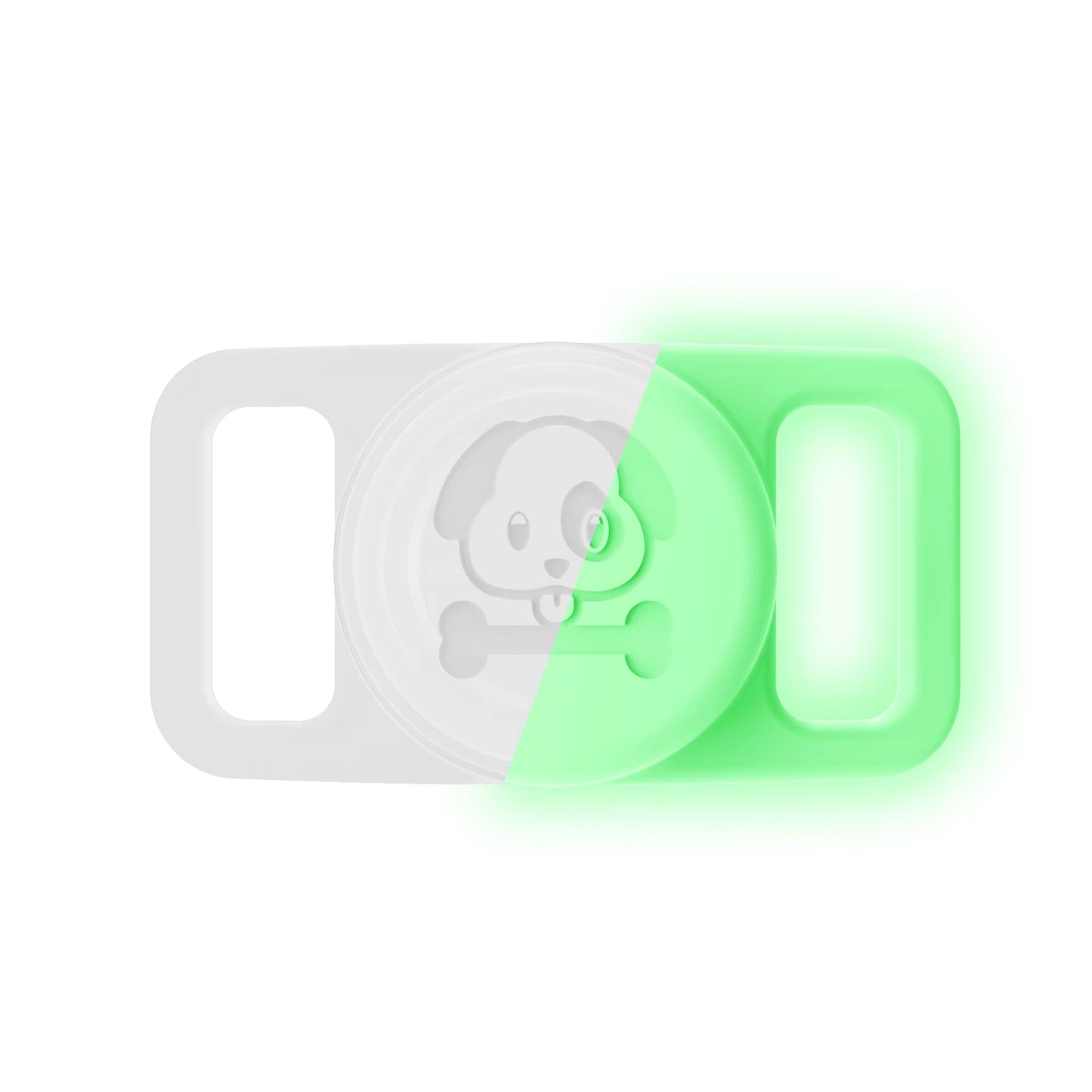
If your dog wears an Apple AirTag, a waterproof Pawfetchers holder keeps it clipped to their collar during off-lead beach time. It's a handy extra, but never a replacement for training and supervision.
FAQs
How long does it take to teach a reliable recall?
Every dog is different. Practise a little every day, and only move on when your dog is succeeding at the current level. Patience pays off.
My dog ignores me at the beach but comes at home. Why?
The beach is far more exciting than your lounge room. Go back a step: use a long line, better treats and quieter times, and build up slowly.
Should I tell my dog off when they finally come back?
No. Always make coming back a good experience. Telling them off teaches them that coming to you leads to trouble.
When can my dog go off lead at the beach?
RSPCA Australia suggests waiting until recall is at least 80% reliable on a long line in distracting places, and only in secure areas where off-lead dogs are allowed.
What is the best word to use for recall?
Any short, clear word works, such as "come" or "here". For an emergency recall, choose an unusual word you won't say by accident.
Off to practise on the sand? The Pawfetchers waterproof AirTag holder fits collars 15–25mm wide, comes in 14 colours and ships within 24 hours from Sydney. AirTag sold separately.