Are AirTags Waterproof? What the IP67 Rating Actually Means for Dog Owners
Share
Quick answer: Apple rates the AirTag itself as IP67 — splash, rain and dust resistant, and able to survive submersion up to 1 metre for up to 30 minutes. That's a solid rating for an accessory designed to live on a keyring. It's a smaller margin for something strapped to a dog that swims at the beach, gets hosed off after the park, and sits in a wet holder in the sun for hours afterwards. The rating isn't the whole story — how it's held on the collar matters just as much.
What IP ratings actually measure
"IP" stands for Ingress Protection, and the rating is two digits: the first covers dust and solid particles (0–6), the second covers water (0–9). Apple's AirTag is rated IP67 — the "6" means dust-tight, the "7" means it can handle temporary immersion in up to 1 metre of water for up to 30 minutes.
That's good for accidental exposure — dropping it in a puddle, getting caught in rain, a dunk in the bath. It is not the same as "designed to be submerged repeatedly". An IP68 rating covers deeper or longer immersion under conditions the manufacturer specifies. Apple doesn't rate the AirTag IP68 and doesn't market it as swim-proof.
Apple's AirTag rating vs a dog's real life
A keyring tag gets the occasional splash. A dog's collar accessory gets a different pattern of exposure:
- Repeated full submersion during swims, not a single accidental dunk
- Salt water at the beach, which is harder on seals over time than fresh water
- Mud and sand working into any gap or seam
- UV and heat on a collar outdoors all day
- Knocks and pressure from rough play
None of this means an AirTag will fail quickly on a swimming dog — plenty of owners use them this way. It does mean the margin for error is smaller than the rating alone suggests.
Why the holder matters as much as the AirTag
This is the part most buying guides skip: the AirTag's IP67 rating only protects it while its own seals are intact. A holder that lets the AirTag rattle around, or leaves it exposed to direct knocks and sand, works against the rating rather than backing it up. A well-designed holder should:
- Fully enclose the AirTag rather than leaving parts exposed
- Let you remove the AirTag to rinse and dry everything after salt water
- Be waterproof in its own right, with a stated rating, so it isn't the weak point
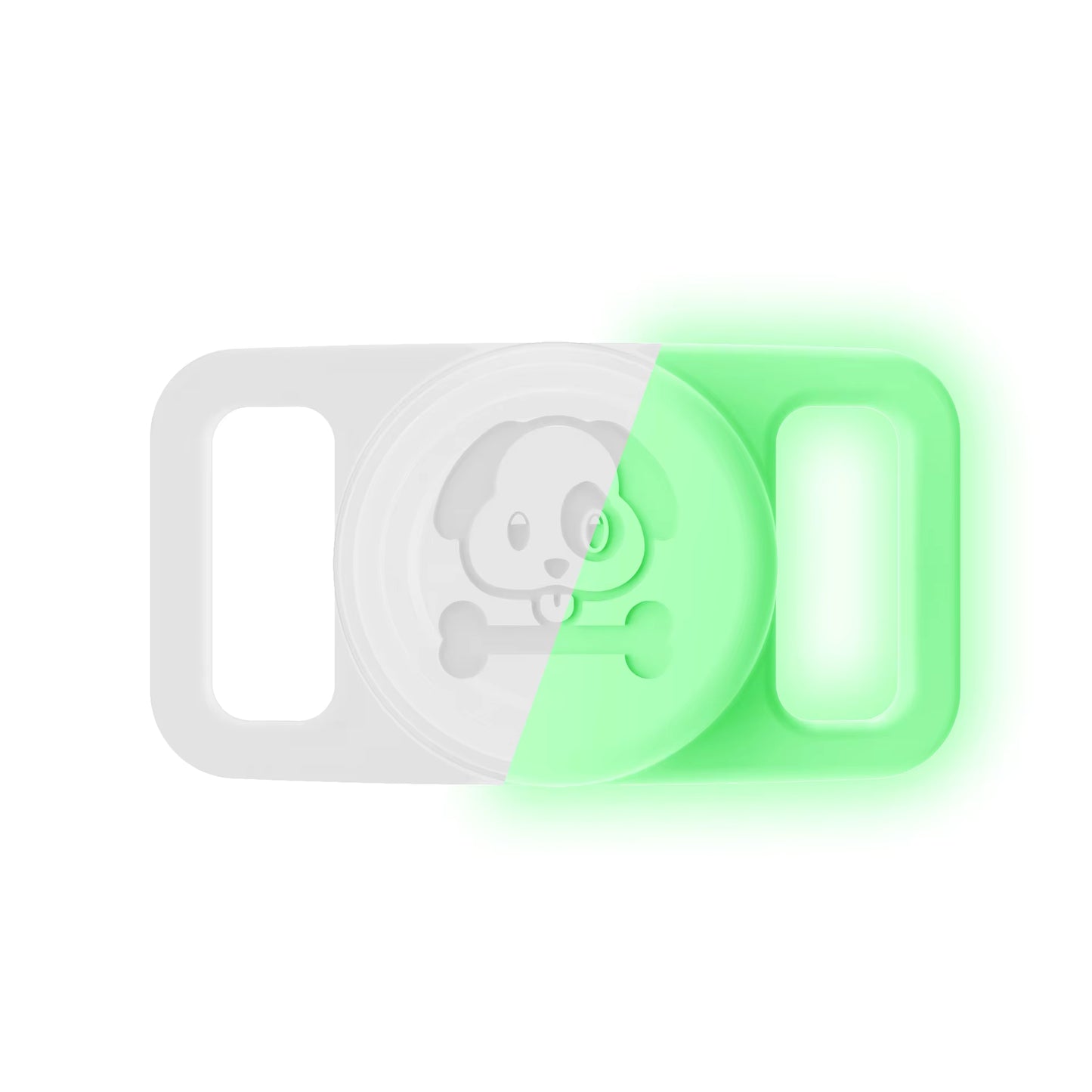
That's how the Pawfetchers holder is designed: a sealed silicone holder that encloses the AirTag, rated waterproof to 1 metre for 30 minutes in its own right, and slides onto flat collars 15–25mm wide so it sits flush.
Why "waterproof" wording varies so much between listings
Compare a few AirTag holder listings and the language shifts between "waterproof", "water-resistant" and "splash-proof", often with no rating attached. A specific, checkable claim (like our 1 metre for 30 minutes) tells you more than an unrated adjective. If a listing doesn't state a rating or tested condition, ask the seller before trusting it for swimming.
Testing your own setup at home
A simple, low-risk check for any holder: with the holder closed and no AirTag inside, submerge it in a sink for a few minutes, then open it and look for water inside. It isn't a substitute for a manufacturer's rating, but it's a useful sanity check on an older holder before a big swim day.
How to protect an AirTag on an active, water-loving dog
- Choose a holder with a stated waterproof rating, not just "water-resistant".
- Check the seal is closed before each swim.
- Rinse the holder in fresh water after the beach, and let the AirTag and holder dry — salt left to sit is harder on seals than a quick rinse.
- Fit it properly (see our holder-fitting guide) and check it hasn't shifted after rough play.
What warranty and replacement actually cover
Read the fine print on both the AirTag and the holder before you need it. Apple's warranty is built around normal use, so check Apple's current terms for liquid damage. The same logic applies to holders: a waterproof rating describes tested conditions, not every scenario a very wet dog can create. Pawfetchers holders carry a 6-month warranty against manufacturing defects.
FAQs
Is an AirTag waterproof enough to swim with a dog? Apple rates it IP67, which covers temporary submersion. It isn't designed or marketed for repeated swimming, so a waterproof, well-sealed holder adds a useful layer.
What does IP67 mean exactly? The "6" means dust-tight; the "7" means protection against temporary immersion in up to 1 metre of water for up to 30 minutes.
Does salt water damage an AirTag? Salt water is harder on seals than fresh water over repeated exposure. Rinsing and drying the holder after beach swims reduces the risk.
Will Apple replace a water-damaged AirTag under warranty? Check Apple's current warranty terms directly — liquid damage coverage depends on Apple's policy, not the holder you use.
Give the AirTag's own rating some backup. See the waterproof Pawfetchers holder (AirTag sold separately).